

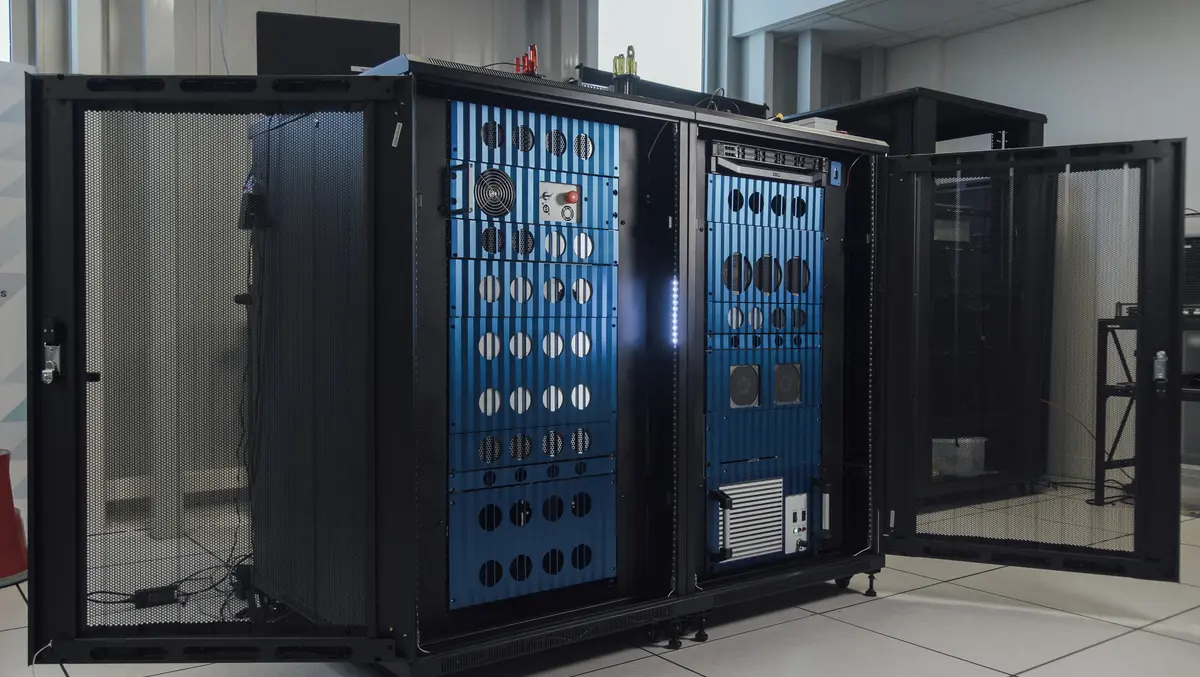

OVHcloud has added Quandela's Belenos quantum computer to its Quantum Platform, giving users in Asia-Pacific remote access to a 12-qubit photonic machine through OVHcloud's network.
The move expands OVHcloud's quantum offering with what it describes as its second reference quantum computer on the platform. Access is provided through a Quantum-as-a-Service model, with pay-as-you-go billing by the second and no long-term commitment.
Developed by French quantum computing company Quandela, Belenos is aimed at organisations testing new algorithms in areas including image sorting and generation, AI-related calculations, and quantum machine learning.
The companies also highlighted research and industrial uses in electromagnetic simulation, structural mechanics, engine combustion, material simulation, meteorology, and earth observation. These examples reflect the broad range of sectors now experimenting with quantum systems, even as practical commercial deployment remains at an early stage.
Platform expansion
OVHcloud launched its Quantum Platform to make quantum computing available through cloud access rather than direct ownership of hardware. The approach is intended to lower the cost and operational barriers for companies, researchers, and developers that want to test workloads on different quantum systems.
Since 2022, OVHcloud says it has supported the European quantum ecosystem and now offers 15 quantum emulators on its infrastructure. Those tools, including Perceval and MerLin, are used by more than 1,000 users and start at €0.03 per hour.
That mix of emulators and physical hardware is common across the sector. Users typically begin by developing and testing algorithms on emulators before moving selected workloads to real quantum processors, where access is more limited and expensive.
Photonic quantum computing, the approach used in Belenos, relies on particles of light rather than superconducting circuits or trapped ions. Supporters argue it offers advantages for some forms of scaling and for operation in networked environments, although the wider industry is still assessing which architectures will prove most useful at scale.
Miroslaw Klaba, R&D Director at OVHcloud, said the addition of Belenos marked another step in the company's plan for the platform. "We are delighted to deliver on the promise of the Quantum Platform by adding a second reference quantum computer, Belenos from the French company Quandela. The quantum revolution accelerates and OVHcloud is taking its part as the European cloud leader within the ecosystem," he said.
European focus
The tie-up also has a regional dimension. OVHcloud and Quandela are positioning the service as part of a broader European effort to build domestic cloud and quantum infrastructure, at a time when governments and businesses are paying closer attention to control over strategic technologies and data environments.
Quandela has focused on building quantum systems for data centres, cloud access, and industrial algorithm development. By placing Belenos on OVHcloud's platform, it can reach a wider base of users without requiring them to deploy dedicated hardware on-site.
For customers, the commercial model may matter as much as the hardware itself. Quantum systems remain highly specialised, and many businesses are still exploring whether any near-term advantage exists for their workflows. Consumption-based access allows users to run experiments and benchmark ideas without making a large upfront investment.
The service is intended for data scientists and innovators as well as research users. That language reflects an industry-wide push to move quantum computing beyond physics labs and specialist teams into broader software and analytics communities.
Niccolò Somaschi, Chief Executive Officer and Co-founder of Quandela, said the OVHcloud arrangement would widen practical access to the machine. "The integration of Belenos 12 qubits into the OVHcloud portfolio marks a decisive step for quantum in Europe. Accessible through the cloud, this photonic computer becomes a concrete tool for businesses. With OVHcloud, we are offering data scientists and innovators alike the mean to develop their algorithms on a flexible and sovereign infrastructure," he said.
OVHcloud operates more than 500,000 servers across 46 data centres on four continents and serves 1.6 million customers in more than 140 countries.