

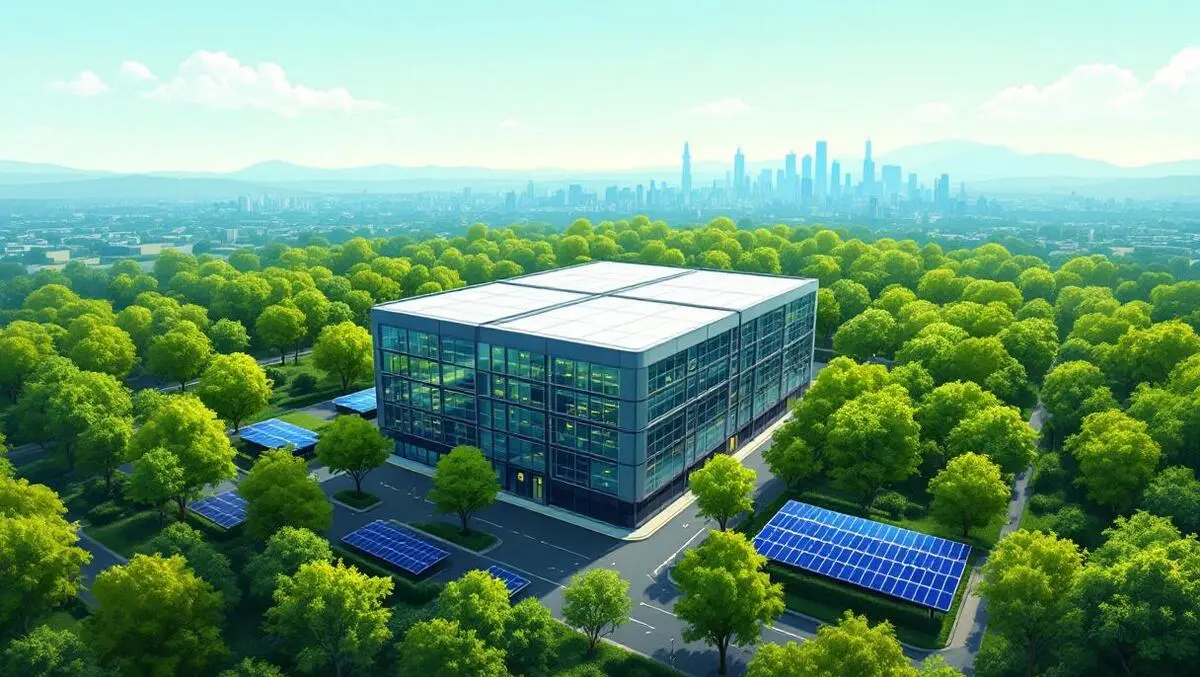
AirTrunk secures SGD $2.25bn green loan for major SGP2 data centre
Tue, 19th Aug 2025
AirTrunk has secured a S$2.25 billion green loan in Singapore to support the development of its new hyperscale data centre, SGP2.
The loan represents the largest-ever financing of its kind for a data centre in the city-state and marks a significant development in the region's sustainable digital infrastructure investment. The transaction demonstrates the increasing importance of responsible investment within Asia-Pacific, while contributing to Singapore's status as a green finance hub, in line with the broader objectives of the Monetary Authority of Singapore.
Financing details
The loan, described as a green loan, complies with the Technical Screening Criteria of the Singapore-Asia Taxonomy for Sustainable Finance and follows AirTrunk's Green Financing Framework. The arrangement sees Crédit Agricole CIB, DBS Bank, and ING Bank acting as Global Coordinators and Sustainability Structuring Agents. The Singapore-based teams of these institutions led the development in conjunction with 23 other local and international financial organisations. The Mandated Lead Arrangers and Bookrunners in this consortium are MUFG Bank, Natixis CIB, Standard Chartered Bank (Singapore), and United Overseas Bank.
This financing begins as a green loan, with an option to transition to a sustainability linked loan (SLL). Notably, all financial incentives from the loan will be allocated to AirTrunk's social impact fund, supporting community programmes within Singapore.
Executive statements
AirTrunk Founder & Chief Executive Officer, Robin Khuda, said: "This landmark transaction – Singapore's largest loan and green loan for a data centre – strengthens AirTrunk's leadership in sustainable finance and reflects strong market confidence in AirTrunk's growth and sustainability strategy. "This financing structure highlights the strength, depth, and international scale of Singapore's financial ecosystem. We're proud to contribute to the nation's momentum as a world-leading green finance hub while scaling our platform responsibly to deliver lasting social impact for the Singapore community," he said.
Jasmine Zhang, Head of Telecom Finance for Asia-Pacific at Crédit Agricole CIB, commented: "AirTrunk's SGP2 facility sets a new benchmark for responsible infrastructure development in Asia. Its innovative green loan structure with option to convert into a sustainability linked loan (SLL) at a later stage reflects a holistic approach to long-term impact, and we are pleased to be part of this journey."
DBS Bank's Group Head of Telecommunications, Media & Technology, Western MNCs and Digital Economy, Amit Sinha, stated: "The data centre sector is fast emerging as a key growth industry for Asia. This landmark green loan represents the largest financing for a new data centre facility in Singapore to date, underscoring the scale and significance of the project. It comes at a pivotal time as demand for computing power continues to surge across the region. As both a global financial hub and a data centre leader, Singapore is uniquely positioned to catalyse the sector's transformation. We are proud to be working with AirTrunk to support the development of critical digital infrastructure in a more sustainable way."
Krishna Suryanarayanan, ING Bank Managing Director and Head of TMT & Healthcare, added: "This marks another significant milestone in AirTrunk's sustainable finance journey, strengthening its reputation as a sustainability leader among data centre operators globally. ING is delighted to back AirTrunk's dedication to responsible growth."
Project features
AirTrunk will collaborate with technology partners to deliver the sustainably designed data centre in Loyang, Singapore. The facility will offer over 70 megawatts of cloud and artificial intelligence compute capacity to support both domestic and Southeast Asian digital infrastructure needs.
The data centre's design aims for a BCA GreenMark Platinum rating, featuring a Power Usage Effectiveness (PUE) of 1.20 – positioning it among the most efficient data centres in Singapore. Additionally, the site incorporates the use of green concrete and steel across the campus, further reducing embodied carbon and lowering the project's overall environmental impact.