

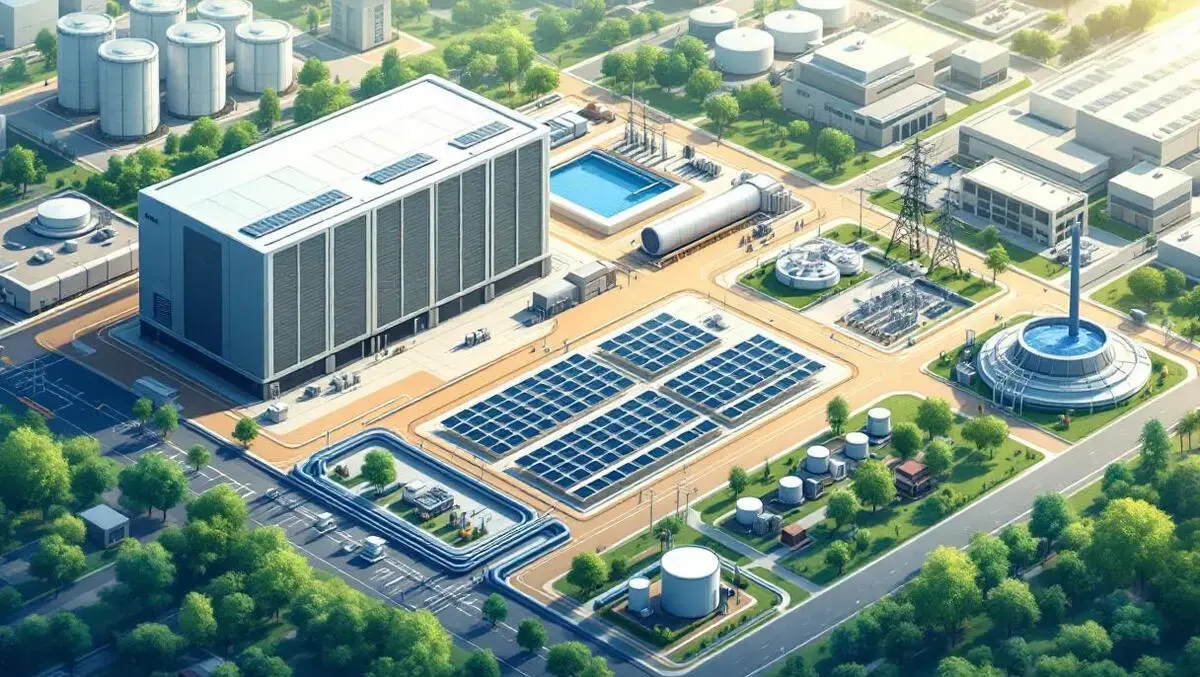
TBH urges integrated utility precincts for data centres
Wed, 1st Apr 2026
TBH has published a report proposing integrated utility precincts for data centre development, arguing that the model could help address growing pressure on power, water, land and planning systems.
The study, titled Powering Data Centres: Are Integrated Utility Precincts the Answer?, explores how developers and policymakers could move from site-by-site delivery to precinct-scale infrastructure planning. It sets out a framework in which data centres sit within shared systems for electricity, water, cooling and other supporting infrastructure, rather than operating as stand-alone, resource-intensive users.
Demand for data centres is rising as artificial intelligence, cloud computing and broader digitalisation drive new investment in computing capacity. TBH argues that this growth is colliding with tighter utility constraints, longer grid connection timelines and greater public scrutiny over land, power and water use.
Those pressures, it says, are increasing project risk and could delay delivery in several markets if infrastructure planning remains fragmented. The proposed precinct model is intended to coordinate utility provision at district level, with shared assets designed to reduce duplication and improve resilience.
Shared Systems
The report outlines several elements that could form part of an integrated utility precinct, including shared renewable generation, energy storage, recycled water systems, waste-heat reuse, circular economy measures and built-in redundancy across critical services.
TBH argues that this approach could lower capital and operating costs by spreading infrastructure across multiple users. It also says precinct-scale planning could improve access to renewable energy and recycled water, while helping governments align data centre development with broader utility strategies and planning goals.
The report places the issue in a wider policy context, noting that data centres are increasingly judged not only on delivery speed and technical performance, but also on how well they align with decarbonisation targets and environmental, social and governance frameworks. In that context, the consultancy argues that isolated developments may struggle to meet rising expectations from communities, regulators and investors.
Examples cited in the report suggest parts of the model are already emerging in several regions. In Asia-Pacific and the United States, clusters of data centres are increasingly being linked with renewable power, battery storage and recycled water systems in response to local grid and water constraints.
In the Middle East, the report points to large solar developments and early hydrogen schemes as examples of shared utility infrastructure supporting energy-intensive digital projects. Across Europe, it highlights district energy networks that connect data centres to broader heat, power and water systems, including arrangements that reuse waste heat.
Industry Pressures
Those examples support the report's argument that utility and planning constraints are no longer secondary issues for the sector. Instead, it presents them as central to whether new capacity can be brought online at the pace required by tenants and investors.
This is particularly relevant in markets where suitable land, transmission access and water availability are all becoming harder to secure. TBH says a more integrated delivery model could help reduce bottlenecks by treating data centres as anchor users within larger infrastructure ecosystems.
Rob Hammond, Director and Global Data Centre Lead at TBH, said the sector now needs to think beyond individual sites. "The next phase of global data centre growth will be shaped by how effectively facilities integrate with surrounding energy, water and community systems," Hammond said.
"Integrated utility precincts provide a pathway to move beyond incremental, site-by-site solutions and deliver infrastructure that is efficient, resilient and socially sustainable."
The report also presents the model as relevant to public authorities and long-term investors, not only operators and developers. By pooling infrastructure and planning at precinct scale, TBH argues governments may be better able to manage competing demands on utilities while linking digital infrastructure projects to economic development and sustainability objectives.
Stuart Cassie, Director and APAC Data Centre Lead at TBH, said debate around the sector often centres on competition for resources. "Data centres can either be perceived as competitors for scarce resources or as catalysts for more resilient infrastructure systems," Cassie said.
"Integrated utility precincts shift the narrative toward shared value and long-term system efficiency."