

Singapore Budget 2026 backs secure, cost‑savvy AI push
Mon, 16th Feb 2026.webp)
Singapore's Budget 2026 has drawn a measured but largely positive response from technology and cybersecurity leaders. They pointed to the government's focus on artificial intelligence, digital risk and long-term resilience as central to the city-state's next phase of economic development.
The Budget outlined a national push on AI through new National AI Missions and a National AI Council, alongside support schemes aimed at helping businesses and sectors adopt the technology.
Commentators described the package as an attempt to balance rapid digital innovation with security, governance and cost discipline, as cyber threats rise and budgets tighten.
AI as strategy
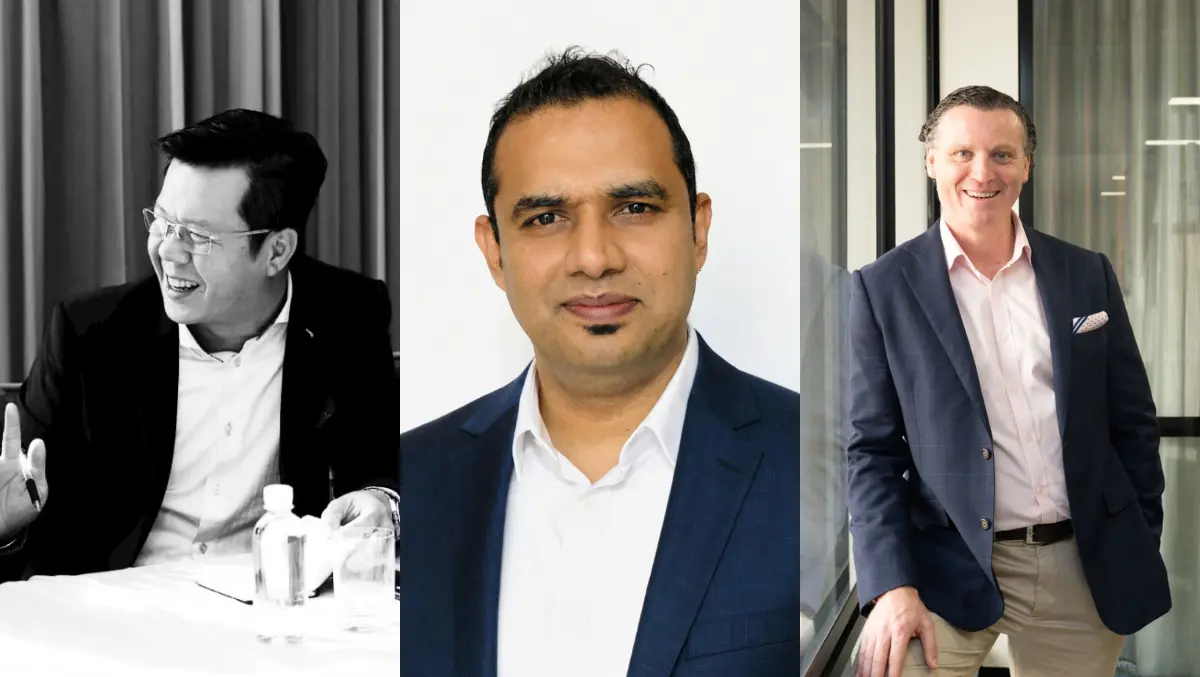
George Lee, Senior Vice President, Asia Pacific & Japan at cybersecurity firm Proofpoint, said the Budget confirms AI's central role in Singapore's growth plans.
"AI is no longer hype and it is now core to Singapore's economic strategy. With the launch of Singapore's new National AI Missions - driven by Singapore's new National AI Council - the government is calling for businesses and individuals to collaborate and drive our national AI agenda. This is a strong signal that AI will be critical to strengthening workforce resilience amidst the changing economy and will be a strategic advantage to facilitate long-term economic growth for the nation," Lee said.
Lee said the national push also increases the need for stronger safeguards and better data handling.
"As AI capabilities become more pervasive, so does the imperative for a responsible and secure adoption. This means not just focusing on technological advancement, but equally on robust AI governance, data integrity, privacy protection, and the mitigation of inherent biases. In fact, Proofpoint's Data Security Landscape report reveals that two in five (40%) organisations in Singapore cite data loss via public or enterprise GenAI tools as a top concern. Securing and governing AI is a foundational pillar for sustainable AI adoption in 2026, helping ensure businesses remain resilient and competitive in today's economy," Lee said.
Cyber threat focus
Proofpoint also highlighted how cyber attacks are evolving as AI tools spread among both defenders and threat actors.
"The sophisticated cyber threat landscape continues to evolve, with threat actors increasingly leveraging AI themselves. As AI integration expands, the 'human element' remains the primary target for advanced attacks. This demands a proactive, adaptive, and crucially, a human-centric security strategy. Budget 2026's emphasis on both innovation and security, including the new "Champions of AI" programme that supports businesses in comprehensively adopting and transforming using AI, ensures that Singapore can truly harness AI's power while safeguarding its digital future," Lee said.
Third-party risk
Cybersecurity firm BlueVoyant focused on supply chain and third-party risk, which it said remain acute despite relatively mature practices among Singapore organisations.
"The 2026 Budget reinforces the importance of building long-term resilience to supply chain disruption, and third-party risk sits at the centre of that challenge. As supply chains digitise and interconnect, managing the broad spectrum of third-party risks across legal, financial, geopolitical and cyber domains has become a defining capability. As one of Asia's leading technology and innovation hubs, Singapore has set a high bar. BlueVoyant research shows that 60 percent of Singapore organisations now report established or optimised third-party risk management (TPRM) programmes, higher than the U.S.," said Shilu Pushpan, Country Manager, Singapore at BlueVoyant.
Pushpan said recent experience shows that strong processes do not eliminate exposure to incidents that originate in complex supplier networks.
"Yet maturity does not equate to immunity. Despite strong TPRM capabilities, 93 percent of Singapore organisations experienced negative impacts from a supply chain-related cyber incident, up sharply from 70 percent in 2024. This rise reflects not only an increase in attack volume, but also greater visibility into risk as monitoring improves. It underscores a critical reality, when even advanced organisations remain exposed in a highly interconnected ecosystem," Pushpan said.
Continuous monitoring
BlueVoyant said AI-backed monitoring and closer engagement with vendors will become more important as supply chains grow more complex.
"As supply chains grow more complex, periodic assessments and traditional monitoring are no longer sufficient to contain the risks. Organisations require continuous visibility into vendor risk, underpinned by senior leadership engagement that drives accountability and action. The Singapore Government's support for AI adoption, including the Productivity Solutions Grant, will also serve as a key enabler. Nearly two-thirds of organisations identify AI as best suited to monitoring supplier risk at scale, given the volume and velocity of signals generated across third-party environments. To realise this potential, Singapore organisations must adopt a more resilient model of cyber defence, one that prioritises shared responsibility and continuous visibility. By moving from passive monitoring to active, collaborative remediation of security issues with suppliers, organisations can better identify and help fix risks, and contain impact when incidents occur," Pushpan said.
Cost of AI
Observability firm New Relic focused on the economics of AI adoption following the Budget's national AI initiatives.
"The Budget's national AI push underscores the Singapore Government's continued commitment to accelerating trusted AI adoption. For Singapore organisations, scaling AI comes at a pivotal moment. As economic uncertainty intensifies and cost discipline becomes paramount, many businesses are confronting the reality that AI tools are expensive to operate and that the costs of building and scaling AI-enabled capabilities can be difficult to predict. Success will depend on adopting AI in a way that delivers clear commercial value while maintaining tight control over operational expenditure," said Rob Newell, SVP and GM, APJ at New Relic.
Newell said companies should focus on high-value applications and use large language models selectively.
"Businesses need to be strategic about how they achieve results while managing costs. One of the most effective ways to control AI spending is to focus on the areas where it delivers the most value, using large language models (LLM) efficiently rather than broadly. By prioritising high-impact use cases and refining their approach over time, companies can get the benefits of AI without overspending," Newell said.
He added that many organisations can cut costs by simplifying system design and avoiding an automatic reliance on the newest models.
"By simplifying how AI features are designed and used, organisations can reduce costs while also improving speed and reliability. Rather than defaulting to the newest or most advanced models, businesses should choose solutions that are fit for purpose. In many cases, proven and more affordable options can deliver the same customer value at a much lower cost when applied thoughtfully," Newell said.
Discipline and observability
Newell said discipline is needed as organisations move AI projects from experimentation into production at scale.
"A disciplined approach to production is equally important. While cutting-edge models may be essential during prototyping to validate feasibility and customer impact, they are rarely cost-effective at scale. Once the value of an AI initiative is clear, organisations should shift their focus to reducing costs by simplifying how the technology is used and selecting more cost-effective solutions that still deliver strong results. By continually testing, refining and scaling what works, companies can strike the right balance between innovation and affordability, ensuring their AI investments deliver lasting value without placing unnecessary pressure on budgets. An intelligent observability practice offers IT teams end-to-end visibility into their AI-integrated workflows, providing real-time insight to troubleshoot, compare, and optimise approaches. This allows companies to make adjustments when necessary to manage costs, improve performance, and reduce common issues that can cause costly hiccups," Newell said.
Carbon and software
Newell also linked AI growth to the environmental impact of digital infrastructure and argued for "GreenOps" practices in software teams.
"Decarbonisation efforts often focus on physical infrastructure, yet digital infrastructure is a growing source of Singapore's greenhouse gas emissions. As AI adoption accelerates, the technology sector's energy demands will only increase, making sustainable software practices not just an environmental imperative, but a business one. Software teams can make a tangible difference through GreenOps, an approach that optimises how software systems are designed, deployed, and operated to reduce waste, energy consumption and carbon emissions, while lowering costs." said Newell.
Rob Newell also stated that GreenOps is about efficiency across the full software lifecycle. By designing systems to use resources more effectively, organisations can reduce the number of servers required, leverage autoscaling to match capacity with demand, and minimise unnecessary energy use.
"These practices not only shrink the carbon footprint of digital products and data centres, but also deliver measurable cost savings" said Newell. "In doing so, businesses can align financial performance with environmental responsibility, demonstrating that sustainability and profitability can advance hand in hand."