Passwords stories
81% of ASEAN businesses are allowing unapproved personal devices for work - and 38% of those devices don't comply with their company's IT policies.
Less than half of internet sites support HTTPS, despite it being a 'must have' for all businesses, a new survey has found.
Password re-use across businesses is a major cause of cyber breaches, according to a new report from Digital Shadows.
SailPoint's Market Pulse Survey highlights contractors and unstructured data as major security risks for enterprises.
The concept of a password was developed so that users could only access their own specific files for their allotted four hours a week.
If you use starwars100 as any of your passwords, now might be a good time to have a look at how strong your passwords actually are.
WordPress, the most popular and most used content management system, is also a great tool for businesses and individuals.
Microsoft has launched 'phone sign-in' specifically for Microsoft accounts on Android and iOS - but what about Windows Phones?.
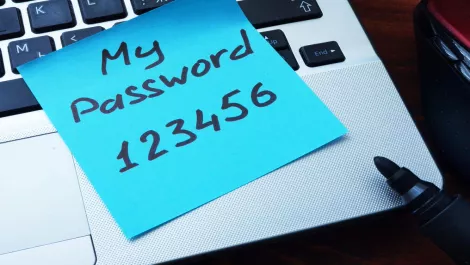
The humble password is still creating headaches for internet users across the world – and many people are still making bad password decisions.
At least 15% of home routers in the UK are unsecure, with weak passwords and software vulnerabilities, according to research by ESET.
It seems that for every work device you use, you have a personal alternative. But this means having twice as many gadgets & security concerns.
Weak, default or stolen passwords are responsible for 63% of data breaches, warns Centrify's David McNeely. Time to rethink security is crucial.
Change your password now and make it strong. That's the advice from Symantec after Mark Zuckerberg was the latest victim of a password leak.
Last week played host to World Password Day and there couldn't be a better time to make sure your passwords are fresh and up-to-date.
ESET has officially announced a new version of its secure, mobile-based two-factor authentication system, ESA 2.4.
IT pros can save valuable time by investing in employee education on IT security, reducing risks and mitigating errors from uninformed actions.
In the future, free-form gestures, such as a doodle or signature, may be used in place of passwords to keep mobile devices secure.
On the whole, people appreciate how much technology has improved their lives, but the risk of personal information being exposed is on their minds.
Data theft is continuing to spur on the mobile identification market, and will generate an additional $700m for mobile network operators by 2020.
Xero ramps up its online defence, launching a two-step verification process to safeguard customer data on its accounting platform.