NVIDIA Blackwell stories
The new Seoul lab deepens South Korea's push to build AI talent and infrastructure as global demand for compute and chips surges.
German industrial customers can now get private AI cloud environments within hours, as the service starts running NVIDIA DSX OS at scale in production.
Rising AI assistant traffic is forcing travel platforms to return bookable fares faster, prompting Amadeus to test NVIDIA chips and models.
The new services are designed to help enterprises move AI systems into production while keeping latency, data access and agent security under control.
The system could cut robot retraining from hours to minutes in factories where layouts and product lines change often.
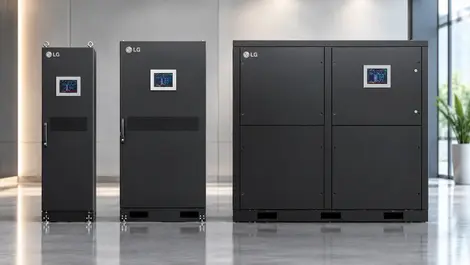
As AI racks draw more power, data centre operators are shifting to liquid cooling, and LG's latest unit now meets NVIDIA's reference design requirements.
It lets regulated firms run AI on sensitive data without exposing customer records or model weights to infrastructure operators.
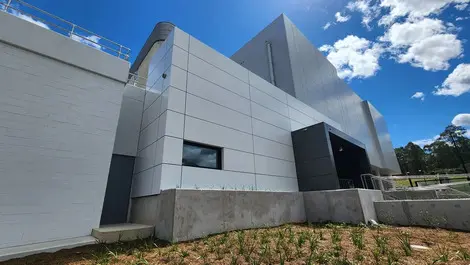
The first stage of SYD1 now has an anchor customer, as Australia's AI data centre market moves from planning to deployment.
Electricity is becoming the main bottleneck for AI data centres as new Nvidia partnerships aim to raise output per megawatt.
Interrupted batch workloads can now resume where they stopped, potentially cutting wasted compute and delays for Google Cloud customers.
The move deepens Nvidia's grip on AI server design as cloud customers seek tighter integration, lower power use and faster deployment.
Rising demand for validated AI infrastructure is driving Cisco and NVIDIA to add rack-scale support for larger enterprise deployments.
Enterprises in Asia-Pacific are moving AI from trials to production, driving demand for low-latency, distributed computing closer to users and data.
The deal ties QumulusAI's returns to a hedge fund's trading gains, adding profit sharing to standard compute fees and heightening revenue risk.
Agentic AI systems are driving a shift to continuous post-training, which NVIDIA says will shape future demand for its Vera Rubin platform.
Energy and cooling limits are becoming the real bottleneck for AI operators, as NVIDIA says Blackwell racks can lift output within fixed power budgets.
Many agencies are still stuck in pilots, as Google's new government AI tools aim to tackle security, integration and classified search needs.
The reuse project boosts AI capacity by 275% inside the original building footprint, while cutting structural upfront carbon and water use.
Buyers can now reserve MSI's first RTX Spark laptop, a 2-in-1 aimed at local AI work, with Australian pre-order extras worth AUD $179.
Local AI development is moving onto Windows desktops and laptops, with Dell claiming support for 1 trillion-parameter models on the new workstation.