Industry 4.0 stories
HUMAIN partners with NVIDIA to build AI infrastructure and supercomputing capacity in Saudi Arabia, aiming to make it a global AI and digital hub.
Siemens updates NX platforms with AI copilot and mixed reality tools, enhancing design, simulation, and collaboration in product engineering software.
Discovery Consulting appoints Shobhit Garg as National Supply Chain Lead to boost digital ERP adoption among Australian manufacturers and asset-heavy industries.
Alcatel-Lucent Enterprise adds PROFINET support to its OmniSwitch 6465, enhancing IT-OT network unity with centralised management and real-time industrial communication.
The satellite IoT market is set to grow at a 26% CAGR to reach USD $4.7 billion by 2030, driven by tech advances and rising demand for remote connectivity.
AI and edge technologies lead Hannover Messe 2025 trends, driving industrial automation with advances in generative AI, DataOps, and private 5G networks.
Research reveals 74% of asset tracking projects deliver expected ROI, with vendor support and system integration key for user satisfaction in various sectors.
Australian manufacturers are turning to ERP and BI tools to navigate trade tariff volatility, boosting operational efficiency and strategic agility amid global uncertainty.
WiseTech agrees to buy US supply chain software group e2open in an all-cash deal worth USD $2.1 billion, funded entirely with new debt.
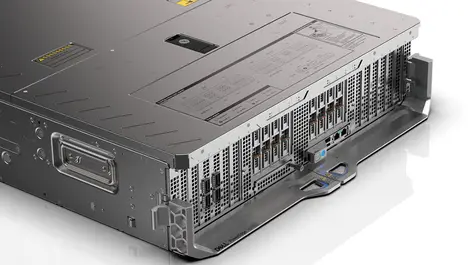
Dell Technologies has launched new enterprise AI solutions with NVIDIA, featuring advanced servers and managed services to accelerate AI adoption and deployment globally.
Schneider Electric and Microsoft have unveiled an industrial Copilot using generative AI to boost productivity and streamline automation in manufacturing environments.
IoT Analytics identifies five key technology trends transforming enterprise tech, from edge AI advances to evolving satellite connectivity and automotive computing.
Snowflake expands its AI Data Cloud with tailored solutions for the automotive sector, boosting data collaboration and predictive analytics across the industry.
AI, robotics and automation are revolutionising global manufacturing, driving efficiency, reducing costs, and transforming the workforce across regions.
In Q2 2025, US CEOs focused on tariffs, recession fears and rising interest in agentic AI during earnings calls, while attention to sustainability waned.
NVIDIA partners with European nations and firms to launch a 3,000 exaflops AI compute initiative, boosting infrastructure across France, UK, Germany, Italy, and Spain.
Australian firm OFS has launched Mayvn AI, a generative AI assistant providing real-time production insights to over 200 manufacturing sites worldwide.
Siemens Digital Industries Software honoured leaders in digital innovation and sustainability with its Techcellence Awards, spotlighting global pioneers driving transformation.
Only 30% of manufacturers have scaled Industry 4.0 beyond pilots, leaving billions in value on the table as AI and automation spread.
Professor Henrik von Scheel, Industry 4.0 originator, will headline Industrial Transformation Australia 2025 in Sydney, discussing future megatrends shaping manufacturing.