

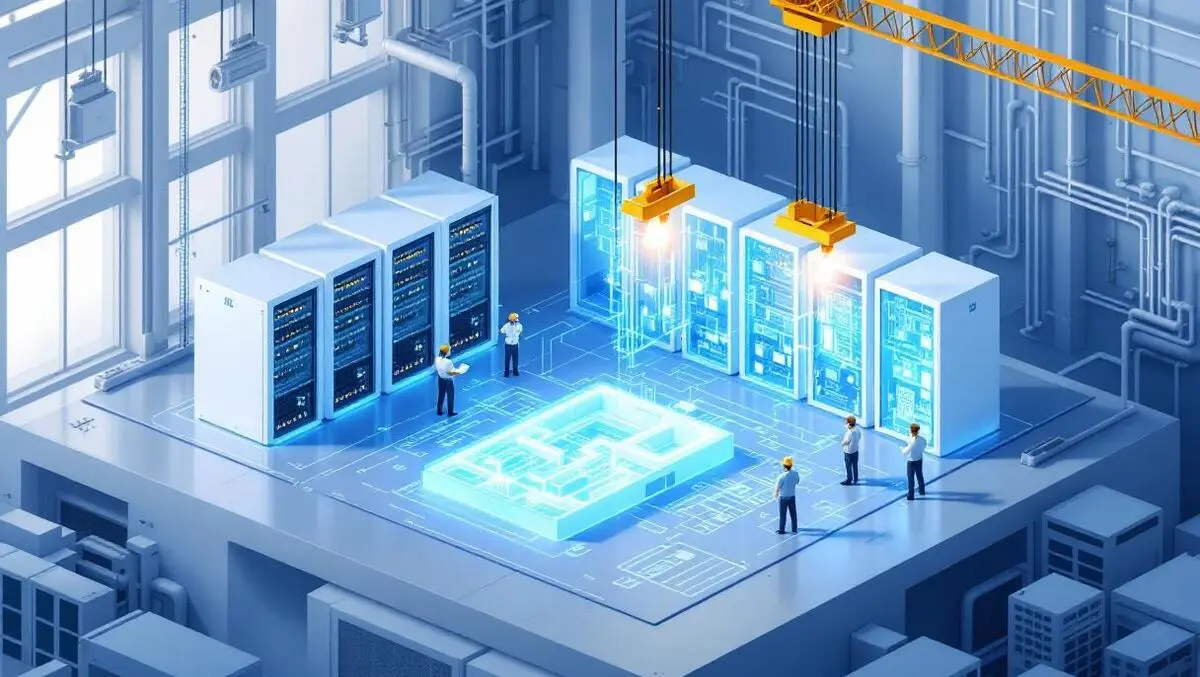
Vertiv unveils OneCore digital twin for AI data centres
Fri, 6th Mar 2026
Vertiv has outlined a shift in how it designs and delivers high-density data centres, moving from static modelling to a Digital Twin platform it says improves deployment speed and predictability for modular builds.
The approach is tied to Vertiv OneCore, an integrated modular data centre offering that combines factory-built infrastructure with digital validation before delivery. Vertiv is positioning the model as a response to constrained construction capacity and rising demand for AI training and inference.
Operators are under pressure to add compute quickly while facing limits on skilled labour, supply availability, site access, and the number of specialist trades needed on a project. At the same time, commissioning and integration timelines have lengthened as power and cooling designs become more complex.
Digital modelling
Vertiv described the shift as moving away from traditional Building Information Modelling to a dynamic environment based on SimReady assets. The platform includes Universal Scene Description export options used in some 3D and simulation workflows. Together, Vertiv said, the tools improve fidelity across design and deployment planning.
Vertiv said the goal is to reduce reliance on sequential hand-offs between design, engineering, and construction teams. It also pointed to inconsistent build quality and weather disruption as factors that add schedule variability when large portions of work happen on-site.
"The industry is reaching the limits of what traditional, sequential construction can deliver," said Giordano Albertazzi, chief executive officer at Vertiv.
"We are not replacing engineering rigor; we are shifting from a product-in-a-product mentality where mechanical and electrical systems fight for space and control to delivering a unitary, fully coherent system where the digital design and the physical asset are inseparable. This isn't just prefabrication; it is convergence and interoperability unlocking compounding gains in speed and efficiency," Albertazzi said.
Factory integration
Vertiv OneCore is structured around repeatable building blocks covering power, cooling, heat rejection, overhead aisle infrastructure, and services. Vertiv said it integrates and tests the elements in the factory before delivery.
Vertiv said the approach reduces on-site labour requirements and limits assembly and rework. It also said it shortens commissioning by reducing the number of interfaces that must be validated in the field.
Vertiv said OneCore can cut on-site work, commissioning, and "time-to-token" by up to 50% compared with traditional builds. It also claimed up to 30% less space than conventional approaches and up to 25% lower total cost of ownership than stick-build designs, citing lower labour intensity and fewer non-repeatable field costs.
Vertiv also said the modular blocks can be configured for rack densities up to 600 kW per rack. That sits at the upper end of current high-density deployments, where operators are increasingly redesigning power distribution and cooling layouts to support AI clusters.
Hut 8 projects
Hut 8 has worked with Vertiv on plans to integrate OneCore into select data centre projects. Hut 8 is an energy and digital infrastructure business with a portfolio spanning multiple sites in the United States and Canada.
The companies said they have aligned on an "industrialised" AI infrastructure architecture, pairing Vertiv's modular system with Hut 8's power and data centre roadmap. Hut 8 said it treats AI data centre delivery as a power-led infrastructure programme rather than a series of bespoke property developments.
"We view AI data centre infrastructure as an integrated industrial system anchored in power, not as a collection of bespoke real estate projects," said Asher Genoot, chief executive officer at Hut 8.
"Collaborating with Vertiv to deploy the Vertiv OneCore architecture strengthens our ability to standardise design, maintain rigorous delivery timelines, and enhance execution confidence for large-scale AI infrastructure projects," Genoot said.
Vertiv said OneCore uses a single design intent across the power train, thermal chain, IT white space, controls, and services. It also said the design avoids dependency on a single compute ecosystem, allowing configurations to be adjusted as AI hardware generations change.
That claim reflects a growing concern about stranded infrastructure. GPU platforms and accelerators have changed rapidly, driving shifts in rack power draw, cooling requirements, and physical packaging. Operators have pushed vendors for layouts that can be reconfigured without rebuilding core mechanical and electrical systems.
Vertiv said its modular electrical and mechanical elements work alongside system-level digital models. It presented the combination as a way to standardise on a repeatable physical architecture while allowing configurations to change across sites and expansion phases.