

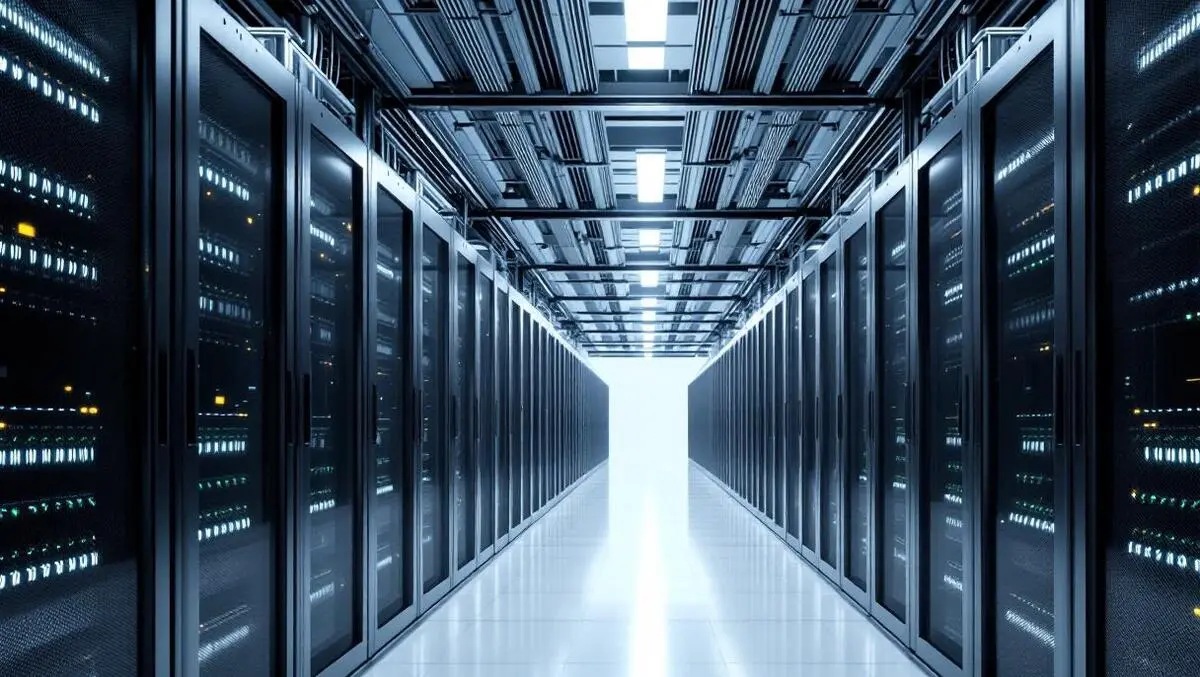

Vertiv has expanded its PowerBar Track busway range with a new double-stack configuration designed for data centres facing rising power density demands from AI workloads.
Vertiv said the design addresses tighter space constraints in colocation and hyperscale facilities, where operators are adding more power-hungry compute within existing footprints. The double-stack format adds capacity in a compact overhead layout and is intended to preserve white space on the data hall floor.
Higher ratings
The PowerBar Track double-stack system is available in configurations of up to 2000A under UL 857 and up to 2500A under IEC 61439-6. Customers can choose copper or aluminium conductors depending on project requirements.
Busway systems have become a common alternative to traditional cabling in large data centres, particularly where operators expect frequent moves, adds, and changes. Overhead busway can reduce cabling under raised floors or in containment areas while providing a structured route for power distribution along rows of racks.
Vertiv said its open-track architecture allows tap-off boxes to be installed or relocated along the busway without taking the system offline, supporting live configuration changes without downtime in continuously operating facilities.
Each connection point includes mechanical and electrical interlocks, according to Vertiv, to improve operator safety during installation and changes. Optional integrated metering provides real-time visibility into power usage, which Vertiv said can support capacity planning and energy management.
The double-stack arrangement supports more connections per tap-off box and can scale vertically, increasing power distribution above a row without expanding the horizontal footprint.
Deployment model
Operators have been revisiting power distribution as rack power draws rise and electrical designs shift. AI training clusters and some high-performance computing installations can create concentrated loads that push power distribution infrastructure closer to its limits.
Vertiv said the new configuration is intended to balance higher power delivery with the constraints of existing buildings. It also linked the product to modular deployment approaches increasingly used in new builds and expansions where construction schedules are tight.
"Power distribution must keep pace with the scale and density of modern AI and high-performance computing environments," said Kyle Keeper, Senior Vice President of the Power Business Unit at Vertiv.
"As customers navigate increasing power demands, tighter space constraints, and rapidly evolving infrastructure requirements, they need solutions that provide flexibility. Vertiv PowerBar Track double stack is designed to address these challenges by enabling compact yet scalable expansion, supporting live changes, and delivering the reliability required in mission-critical data centre environments," said Keeper.
Product fit
The PowerBar Track double stack sits within Vertiv's broader power train, which includes PowerBoard switchgear, uninterruptible power supply systems, and racks. Vertiv said the busway integrates with these elements as part of a coordinated infrastructure for high-density applications.
Vertiv also linked the busway to its Vertiv 360AI power ecosystem, which it describes as a combination of power distribution, protection, and management technologies for AI-ready digital infrastructure. It said the busway integrates with OneCore, a prefabricated data centre infrastructure offering, and SmartRun, an overhead IT infrastructure system.
Vertiv said its global manufacturing and service network supports configuration and maintenance for PowerBar Track installations. The company said the system can be configured to simplify maintenance and reduce maintenance-related downtime, and that the design supports faster deployment for expanding data centres.
The expansion comes as operators and suppliers increasingly view electrical and mechanical infrastructure as a limiting factor for AI-driven capacity growth. For many facilities, the challenge is less about securing overall megawatts and more about distributing power efficiently within the data hall while preserving space for racks, containment, and service access.
Vertiv said the double-stack configuration is designed for modern compute environments where density is rising and change is constant, with live reconfiguration and overhead distribution forming part of the operating model.