

UTSA adopts SpiNNaker2 for sustainable neuromorphic computing
Thu, 13th Nov 2025
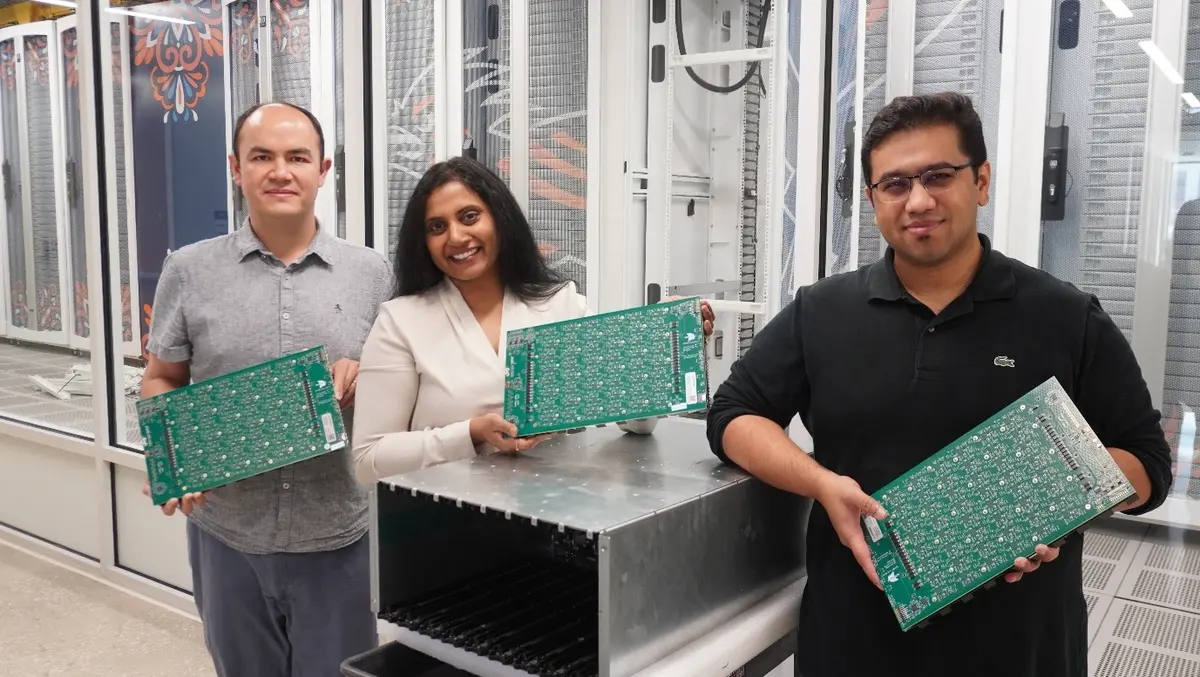
SpiNNcloud Systems has delivered its SpiNNaker2-based supercomputing platform to the Neuromorphic Commons initiative (THOR) in the United States. The installation, hosted by the University of Texas at San Antonio (UTSA), forms part of a project funded by the National Science Foundation to broaden access to neuromorphic computing infrastructure.
Brain-inspired approach
The SpiNNaker2 architecture-originally designed by Professor Steve Furber, known for his work on ARM processors-uses a parallel array of low-power processors. This design enables the simulation of more than 393 million neurons, situating the platform among the top four largest neuromorphic computing systems globally. The architecture is intended for both artificial intelligence (AI) and neuroscience applications, aiming to offer scalability and energy efficiency.
Access for researchers
The THOR initiative is led by Dr. Dhireesha Kudithipudi, Robert F. McDermott Chair in Engineering at UTSA, who also serves as Director of the MATRIX AI Consortium. The project seeks to provide researchers with access to a full-stack neuromorphic ecosystem, with the goal of accelerating developments in AI and new computing paradigms.
"UT San Antonio is proud to be the first U.S. academic institution to adopt SpiNNaker2 technology. Brain-inspired architectures like SpiNNcloud's open new algorithmic pathways with a much smaller energy footprint-a balance that is critical to sustainable AI," said Dr. Kudithipudi, Robert F. McDermott Chair in Engineering, UTSA
Supporting collaboration
The integration of SpiNNaker2 at UTSA will be managed by Dr. Tej Pandit. The project involves contributions from several other co-investigators, including Dr. Catherine Schuman, Dr. Gert Cauwenberghs, and benchmarking led by Dr. Vijay Janapa Reddi of Harvard University and MLCommons.
Dr. Reddi highlighted the relevance of the installation for exploring advancements in AI: "The SpiNNcloud's system at UT San Antonio aligns with our goals to explore sparse neural networks and energy-efficient AI computing," said Reddi.
Sustainable computing
The SpiNNaker2 implementation at UTSA reflects increasing interest in alternative supercomputing solutions. Organisations are looking for systems that support expanding demands across AI and high-performance computing, while also focusing on sustainability and scalability. The Neuromorphic Commons project provides a platform to experiment with these advanced computing architectures.
Dr. Hector Gonzalez, CEO of SpiNNcloud, said, "The deployment to the THOR consortium is a testament to the growing demand for energy-efficient, massively parallel, brain-inspired architectures and their critical role in shaping the future of AI."