

Singapore unveils first biological data centre prototype
Mon, 17th Aug 2026
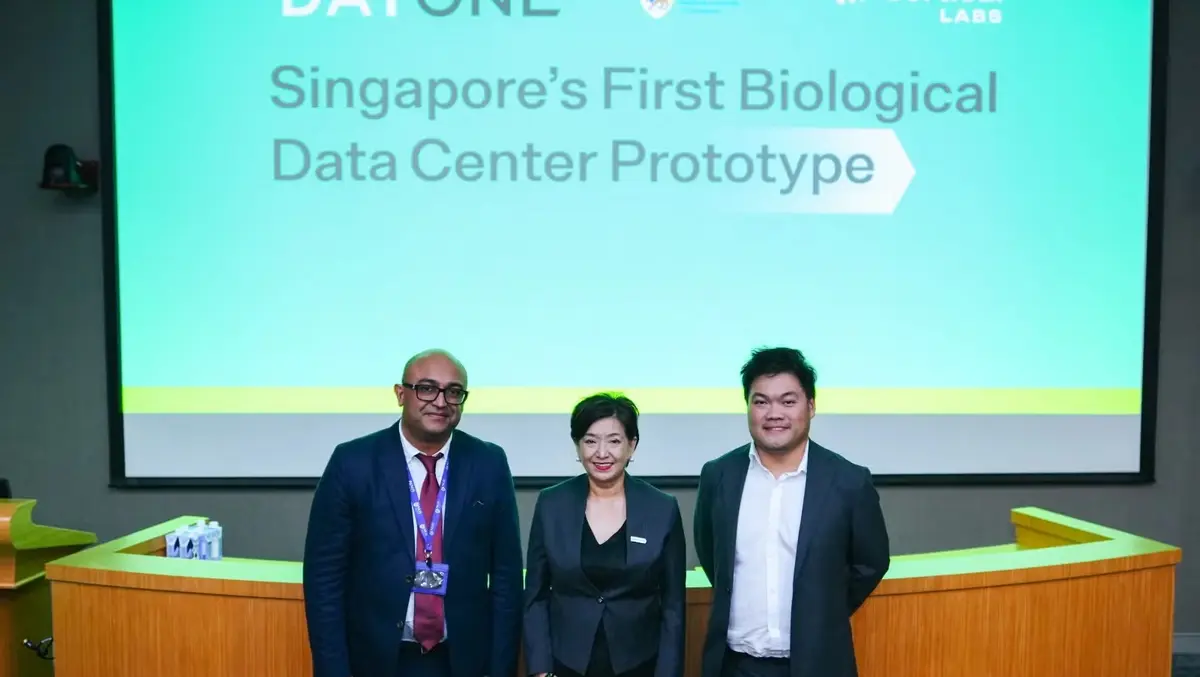
NUS Medicine, DayOne and Cortical Labs have unveiled a biological data centre prototype in Singapore at the NUS Life Sciences Institute.
The project brings together a medical research institution, a data centre developer and a biological computing company to test a form of computing that uses living neurons derived from stem cells alongside conventional silicon chips.
The initial deployment consists of a 20-unit CL1 biological computing system. The partners described it as the world's first independently operated biologically integrated server rack. The units were demonstrated in a live research setting with microelectrode array integration and real-time neural network activity.
The prototype is intended to support development of what the companies describe as a biological data centre, a model that uses so-called wetware to process information and support artificial intelligence systems. The approach is being explored as the data centre sector faces pressure to expand computing capacity while limiting energy and water use.
Singapore has become a test bed for that debate as the government permits new data centre capacity under stricter sustainability requirements. Against that backdrop, the prototype is expected to help assess whether biological computing can fit into the country's digital infrastructure environment.
Research role
NUS Medicine's contribution centres on neurobiology. The cells used in the system will be cultured and grown under the supervision of Professor Rickie Patani, Professor of Neuroscience at NUS Medicine, Director of the Neurobiology Programme at the NUS Life Sciences Institute, and Chair of the Neuroscience Translational Research Programme at NUS Medicine.
The collaboration also points to possible uses beyond infrastructure. The partners highlighted drug discovery, neurological disease research and other forms of biological modelling as areas where biological neural networks could be studied alongside conventional computing systems.
Patani said the work brings scientific research and engineering together in ways that could affect both computing and medicine.
"This partnership marks a genuine shift in how we think about computing and its broader scientific potential. By growing living human neurons from stem cells and pairing them with rigorous engineering, we're not only building a more efficient alternative to silicon; we're creating a platform that can help us understand learning and adaptation at their biological source. That dual promise is what makes this collaboration sustainable and scientifically generative. It gives us a real route to accelerate drug discovery and neurological disease research, turning laboratory insight into real-world impact far faster than we could before," said Professor Rickie Patani, Professor of Neuroscience at NUS Medicine, Director of the Neurobiology Programme at the NUS Life Sciences Institute, and Chair of the Neuroscience Translational Research Programme at NUS Medicine.
Infrastructure push
For DayOne, the prototype opens a route into a new segment of data centre infrastructure as operators seek alternatives to increasingly power-hungry server deployments. The company is providing capital and infrastructure support for the work in Singapore.
Jamie Khoo, Chief Executive Officer of DayOne, linked the effort to the city-state's environmental goals for digital infrastructure.
"Our commitment to Singapore goes beyond capacity. We are here to help shape what the next generation of digital infrastructure looks like, and that means investing in approaches that meet Singapore's sustainability ambitions alongside its AI ambitions. This prototype is a step toward demonstrating that scaling compute and reducing resource intensity are goals we can pursue together," said Jamie Khoo, Chief Executive Officer of DayOne.
"Singapore has the research depth, infrastructure capability, and collaborative ecosystem to lead that exploration. We are proud to contribute to translating frontier scientific research into practical impact, with world-class partners, in one of the world's most sustainability-driven markets," Khoo said.
Commercial questions
Melbourne-based Cortical Labs has been developing computing systems built around living neurons. Its technology is now being tested in Singapore as the company seeks to move from laboratory work toward commercial deployment.
Biological computing may be useful in settings where data is limited and systems need to adapt to changing conditions, according to Cortical Labs. The company identified potential applications including drug discovery, humanoid robotics, cybersecurity and fraud detection.
Hon Weng Chong, Founder and Chief Executive Officer of Cortical Labs, said the new installation moves the work into a more commercial phase.
"The establishment of this prototype shifts the conversation from research to commercial application. Biological computing supplements AI in areas where data is sparse, learning from far less and adapting as conditions change. Our aim is to uncover the use cases where that advantage matters most, in areas such as drug discovery, humanoid robotics, cybersecurity and fraud detection. Ultimately, this is about offering a more sustainable path for the technologies humankind depends on. Singapore is the innovation hub for Asia's data centre industry, and what we build here is the model we intend to replicate and scale globally," said Hon Weng Chong, Founder and Chief Executive Officer of Cortical Labs.
The broader plan under discussion includes site design, operational planning, and work on governance, biosafety and compliance frameworks suited to Singapore. The partners are also examining how biologically based computing systems might be integrated into a live commercial data centre setting under standard power distribution and cooling conditions.
An initial phase would validate performance and efficiency in the NUS environment before any move into a commercial facility. The parties are exploring a larger deployment that could reach 1,000 units in a DayOne facility in Singapore, subject to technical validation and regulatory approvals.
Industry forecasts cited by the companies point to a sharp rise in regional data centre electricity demand over the next decade, increasing pressure on operators to find lower-intensity computing models. The Singapore prototype will now serve as an early test of whether biological systems can operate within mainstream digital infrastructure at useful scale.