

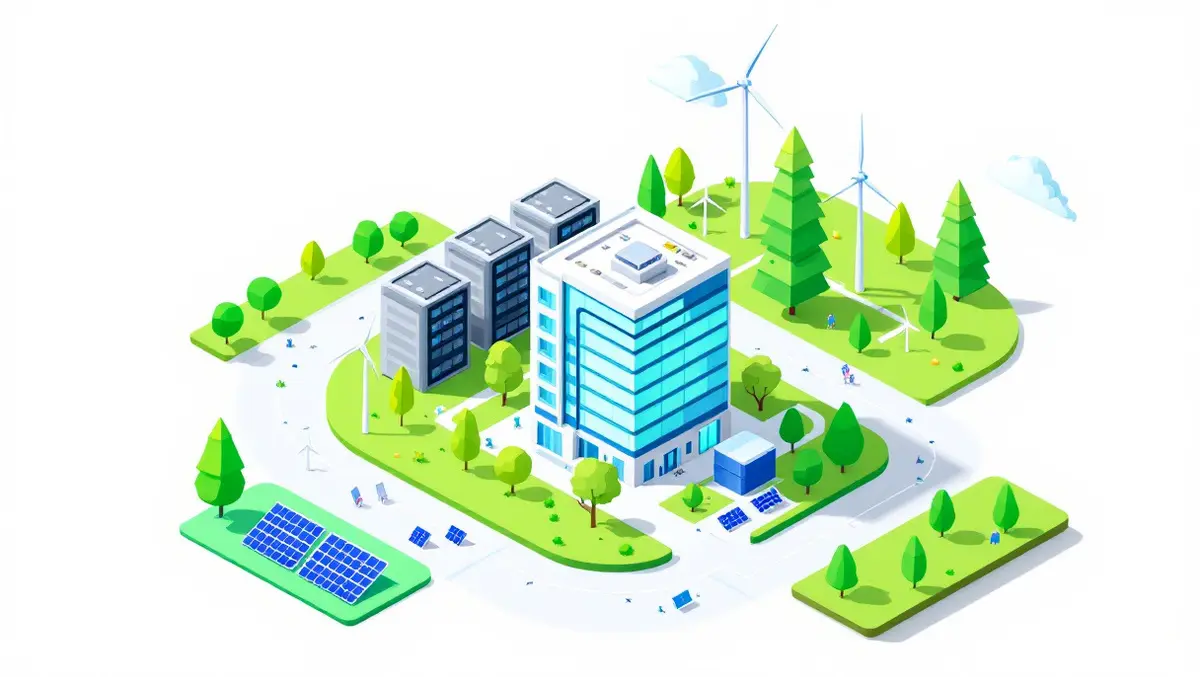
Ramboll report offers roadmap to net zero data centres globally
Wed, 24th Sep 2025
A report from Ramboll highlights strategies for achieving sustainable and net zero data centres as global demand intensifies.
The new publication, 'Developing sustainable data centres: A strategic roadmap to achieve net zero carbon and reduce environmental impact', outlines practical measures that can be adopted across the full data centre value chain - from design through to operation - in order to address increasing concerns about the environmental effects of these facilities.
Growing environmental impact
The rise of artificial intelligence and expanding digital service needs have boosted construction of data centres worldwide, bringing greater attention to their environmental footprint. According to the International Energy Agency, data centres accounted for approximately 1.5 per cent of total global electricity consumption last year, with this proportion anticipated to double by 2030.
"The construction of data centres powered by the rise of artificial intelligence is booming across the globe, driving unprecedented demand for electricity and significantly contributing to global greenhouse gas emissions, increased water consumption, waste production, habitat destruction, and resource depletion," says Ed Ansett, Ramboll's Global Director of Technology and Innovation. "These challenges can be managed and mitigated if data centres are built with climate, biodiversity, and circularity in mind from the very start."
This data centre growth has prompted concerns regarding electricity usage, water consumption, waste, and impacts on local ecosystems and resources, especially in regions where investments in data centre infrastructure are increasing rapidly.
Operational and embodied carbon
The report addresses operational and embodied carbon as critical contributors to the sector's overall emissions profile. Operational carbon, which is the emissions released from the ongoing functions of a data centre, is identified as the major factor drivin' emissions. The roadmap describes the potential to reach net zero operational carbon through a mix of energy efficiency measures, renewable energy procurement, energy reuse and export, and flexible demand response operations.
To tackle embodied carbon, which encompasses emissions embedded in the materials and construction process, the report points to the use of lower carbon steel and concrete, local sourcing, and the repurposing of materials recovered from buildings that have reached the end of their operational lives.
Biodiversity in planning
Another core aspect explored is the impact of data centre facilities on biodiversity. Integrating ecological considerations from the outset of the planning and design phases is advised, to help reduce negative outcomes for local habitats. The report recommends conducting ecological surveys at the early stages in order to identify protected species and habitats, together with involving landscape architects to influence site layouts in ways that preserve and promote ecological diversity.
Emphasis on circularity and water
The concept of circularity underpins several recommendations in the roadmap. Amongst the outlined benchmarks is the goal for data centres to ensure that all materials are reused, reusable, or recyclable, achieving zero output to landfill or incineration. This approach is presented as both environmentally and economically beneficial.
Water consumption is referred to as a particularly acute challenge for data centres, given their high demand for cooling and the strain this can place on water-scarce regions. The report suggests the pursuit of water neutrality by minimising or avoiding water-based cooling, optimising operational water usage, adopting reuse or recycling strategies, and tapping alternative resources such as rainwater.
"There are economic benefits for data centre owners if they focus on circular practices," explains Ed Ansett. "For instance, the sole physical byproduct of data centre energy consumption is heat, which has historically been unused and released to the atmosphere. Data centres are in an excellent position to export what would otherwise be wasted energy."
The findings also include calls to view heat generated by data centres as an exportable resource, potentially providing additional operational value and supporting circularity in regional energy systems.
Value chain considered
The publication takes a full value chain approach, with targets and benchmarks applicable to owners, developers, operators and consultants. Its framework is designed to help these groups assess their current positions, set goals, and measure progress towards sustainability objectives.
The report's release comes amid rising attention and investment in data centre infrastructure, including significant recent commitments such as a USD $1.6 billion platform investment in the Asia-Pacific, and reflects a broader sector shift towards minimising environmental impacts while continuing to meet the surging demand for digital connectivity.