

LG unveils Chip-to-Chiller cooling for AI data centres
Wed, 30th Sep 2026
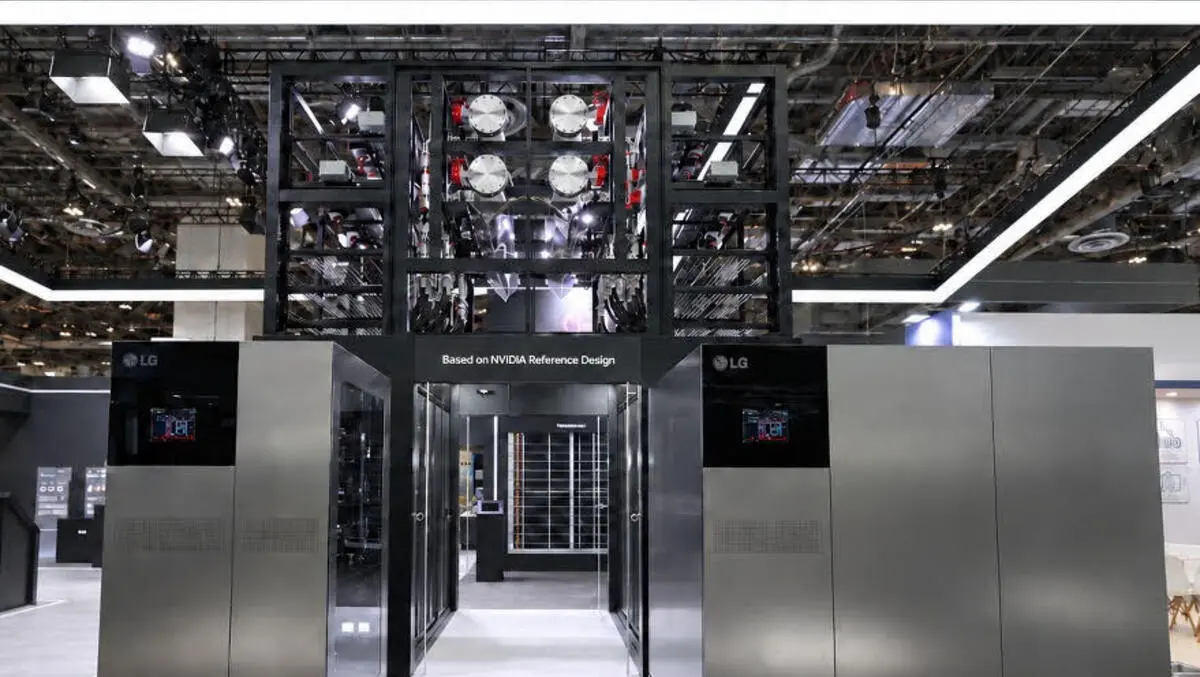
LG Electronics has unveiled its "Chip-to-Chiller" cooling systems for AI data centres at Data Centre World Asia 2026. The display also features a broader "One LG" infrastructure offering developed with LG CNS and LG Energy Solution.
At the Singapore event, LG outlined a portfolio spanning liquid and air cooling, modular plant equipment, and monitoring software for high-density AI server environments. The line-up includes prefabricated hydronic systems, air-cooled centrifugal chillers, coolant distribution units, immersion cooling, fan wall units, and the Data Centre Cooling Manager platform.
LG is seeking to deepen its position in a market where operators are grappling with the heat and power demands of AI computing. As graphics processing workloads spread across larger server clusters, suppliers of cooling and backup power equipment are trying to expand their role from individual components to broader infrastructure packages.
Cooling range
Among the systems on show are prefabricated hydronic modules that combine cooling equipment, power systems, and controls in a single unit. The approach is intended to reduce engineering work at customer sites and shorten installation time.
LG is also featuring air-cooled centrifugal chillers that use an oil-free magnetic bearing compressor. The chillers also incorporate a free cooling system that uses lower outdoor temperatures to reduce compressor demand and cut electricity use.
Liquid cooling is another focus. LG's direct-to-chip offering centres on coolant distribution units, which circulate coolant to cold plates mounted on processors and graphics chips.
Its 1-megawatt, 2.6-megawatt, and 600-kilowatt coolant distribution units have completed NVIDIA infrastructure qualification. The 2.6-megawatt model has also qualified as an NVIDIA DSX Ready CDU under the company's reference design requirements for liquid cooling in AI factory installations.
LG is also showing an immersion cooling system in which servers are submerged in non-conductive fluid. Alongside that, it is exhibiting a fan wall unit designed to provide airflow to server racks using EC fans and oval coils.
Broader package
The wider pitch extends beyond thermal equipment. Through its "One LG" approach, the electronics group is combining its cooling products with data centre design and operating services from LG CNS and battery-based power systems from LG Energy Solution.
LG CNS is presenting a Prefabricated Modular Data Centre model built around standardised off-site modules for GPUs, servers, power, and cooling. It is also showing data centre infrastructure management software intended to oversee multiple facility components.
Meanwhile, LG Energy Solution is displaying battery products for AI data centres, including battery energy storage systems, battery backup units, uninterruptible power supply batteries, and a cylindrical battery for rack-level backup applications.
The combined offer reflects a broader shift towards integrated infrastructure for AI facilities, where operators want to bring computing capacity online quickly while managing denser racks and more volatile loads. Equipment vendors increasingly argue that cooling, power, and software need to be planned together as AI deployments expand.
Management software
At the centre of LG's operating layer is the Data Centre Cooling Manager, a platform designed to manage chillers, fan wall units, and coolant distribution units through a single system.
According to LG, the software uses AI to forecast cooling load and adjust equipment operation. Such tools are becoming more common as operators try to limit power use in facilities where thermal conditions can change rapidly with computing demand.
LG is also attending the exhibition for the second consecutive year and has significantly expanded its display space from the previous edition. That increase underlines the commercial importance of the AI data centre market for industrial equipment makers that have traditionally served the broader heating, ventilation, and air conditioning sector.
For LG, the emphasis on modular buildouts and integrated supply also points to a competitive landscape in which customers weigh speed of deployment as heavily as energy performance. Prefabricated systems can appeal to operators facing long construction schedules, labour shortages, and pressure to secure AI computing capacity more quickly.
James Lee, President, LG ES Company, set out the group's case for bundling cooling, design, and power systems. "As AI data centres grow in scale and complexity, customers need integrated infrastructure that can be deployed quickly, operated reliably and scaled efficiently," Lee said. "By combining LG's Chip-to-Chiller technologies, LG CNS's DBO capabilities and LG Energy Solution's power equipment, we aim to become a leading end-to-end AI factory infrastructure partner."